In what has become an annual tradition, we asked the Law School’s distinguished faculty to tell us about the last good book they read. The results cover a wide range of genres and topics, from law to history, nonfiction to fiction.
We're giving away a selection of books from our faculty reading recommendations list for you to enjoy in the new year! University of Chicago Law School alumni who make a gift of any size by midnight on December 31, 2019, will be included in this drawing. If you have given at any time this fiscal year (including gifts made on or after July 1, 2019), no worries—you have already been entered in the drawing. Give to win.
Rules are as follows: Only University of Chicago Law School graduates are eligible. This promotion will run from July 1, 2019, to December 31, 2019. To be eligible, you must either make a gift to the Law School or send your name and address to:
University of Chicago Law School, Office of External Affairs
c/o Laurel Lindemann
1111 E. 60th Street
Chicago, IL 60637
While you may make multiple gifts, you will only receive one entry in the drawing. The prize winner will be chosen based on a random drawing of all who have made gifts or sent in their information. To receive the prize, winners must agree that their name will be available for publication as a prizewinner. Prizes are subject to change. Current employees of the University are not eligible.
Make a Gift
A thoroughly depressing, but beautifully written book that grapples with the question—is human history a tale of progress or of total chaos that we label “progress” in hopes of maintaining mental stability?

Recommended by Craig B. Futterman, Clinical Professor of Law

I’ve been reading The Firebrand and the First Lady by Patricia Bell-Scott. It calls itself the “Portrait of a Friendship” and tells the story of “Pauli Murray and Eleanor Roosevelt and the Struggle for Social Justice.” I found the book by chance on the sales table of our beloved Seminary Co-op bookstore, and I’ve been enthralled by the story of two such remarkable women. Pauli Murray was an activist and—eventually—a lawyer fighting for civil rights on behalf of African Americans and women. She shared her ideas, her passions, her poetry, and her outrage with Eleanor Roosevelt. Occasionally they also shared tea. It is a peek inside of a remarkable White House and a reminder of how one person can make a difference by raising her voice again and again. In our work in the Law School clinics, we often press for social change based on the power of one person’s story. Pauli Murray’s story and storytelling changed the country in ways that were harder to see than Eleanor Roosevelt’s policy changes, but this book shines a light on that link.

A new and somewhat hagiographic account of Holmes that pays special attention to his youthful idealism and its loss during the Civil War. The biography papers over Holmes's struggles with PTSD, but it provides a nice counterpoint both to the idealistic accounts of Holmes of earlier generations and the harsh ones of more recent times.

It was first published in 1778, it's an epistolary novel made up entirely of letters between the characters, and the subtitle is "The History of a Young Lady's Entrance Into the World." But don't be fooled—it's also a vivid romp, a deeply satisfying story of a young woman's adventures in and around Georgian London, and a psychologically acute treatment of moral and intellectual development. Bonus legal feature: subplots involving questions of fraud, inheritance, and illegitimacy. The necessary precursor to Jane Austen.

A novel about the Troubles told from the sole perspective of a young woman, with a really interesting and effective narrative structure. All characters are referred to only by their roles (oldest sister, maybe-boyfriend, etc.), and not by their names, keeping the focus on our narrator. As events unfold, she goes from being (intentionally) under the radar to becoming (quite unintentionally) interesting to the community. Despite the dark and difficult times, she also effectively conveys her unique sense of humor.
I recommend two books about the "Troubles" in Northern Ireland that we are reading in our Greenberg Seminar on "Reconciliation in Northern Ireland and South Africa." The first is non-fiction: Patrick Raddon Keefe's Say Nothing, an impeccably researched and vividly written drama of deception, betrayal, and a society falling apart for lack of trust. Focusing on the kidnapping of Jean McConville and its aftermath, and using detailed interviews from a formerly secret archive at Boston College, Keefe delves into the minds and actions of both terrorists and their victims. The other is fiction: Anna Burns's Booker Prize-winning Milkman, whose narrator lives through these times with an ironic detachment born of "reading while walking," going around the dangerous streets with her eyes fixed on volumes of Sterne, Scott, and other inhabitants of centuries she prefers to her own. Burns's book is like Keefe's in portraying suspicion, lack of trust, and lack of commitment born of lack of trust, but its themes are ultimately more general: the persistence of hope, the hopefulness of the daily, the fear of love and the irresistible temptation to love. I recommend both reading the book and also listening to it on Audible, with a superb reader.
Milkman is stunning. It’s told from the perspective of an 18-year-old girl in Belfast during The Troubles of the ’70s and ’80s. Her narrative voice and the world it conjures are totally original. Her world is circumscribed by violence, but the terrorism and guerrilla warfare are just substrata. The narrator focuses instead on the more subtle emotional violence that so many in this tight community exact on each other—and themselves—for any social or political deviation, real or perceived. This includes the criticism the community heaps on the narrator for “reading while walking” (her escape from reality as she passes through hostile territory); the suspicion the community trains on the narrator’s “maybe-boyfriend,” a car-lover, for salvaging a supercharger from a Bentley, forbidden for its Britishness; and the machinations of the “vocabulary watchdogs” who police the very names children are given to ensure that no one bears a moniker associated with that detested country “over the water.” The voice of the community operates like a damning Greek chorus, condemning many characters to marry the wrong person out of guilt or duty or just because to choose the right person would be to succumb to more hope than this battered world can allow. At the novel’s center is the ominous Milkman, the embodiment of rapacious men everywhere. He ruthlessly pursues our narrator until gossip becomes gospel and she—like so many others—is terrorized by a false story deemed true by mass suspicion. And yet, somehow, hope and goodness flower in the rubble.
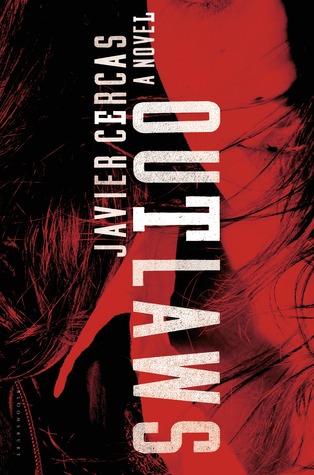
I just now finished a fabulous book translated from Spanish, Javier Cercas’ Outlaws, that is told in the Sebaldian style, breaching the fact/fiction boundary to tell in the most matter of fact way a disturbing story of the lifelong emotional residue from youth gang membership.
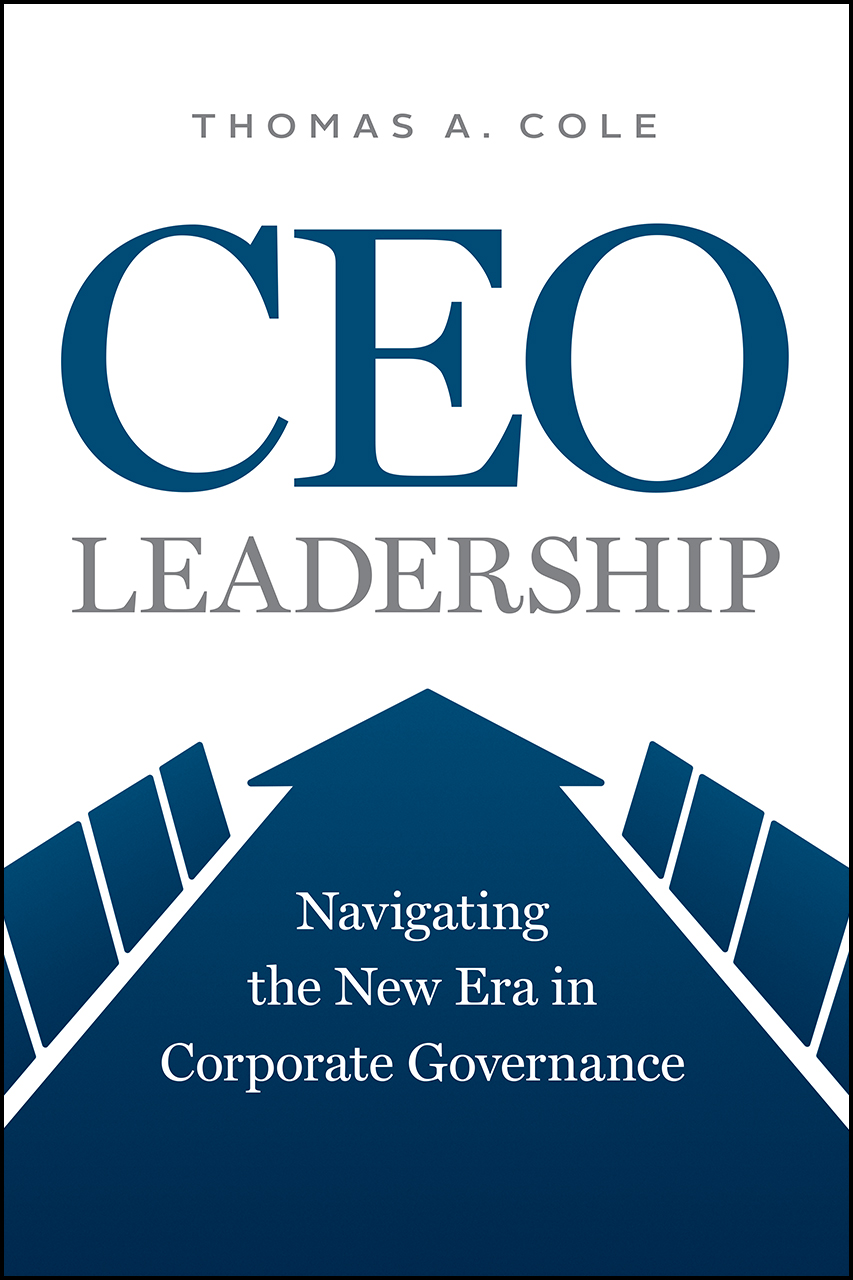
Corporate governance has changed significantly in recent years, and this book expertly guides the reader through the legal, policy, and market forces shaping corporate governance. It is a highly informative and insightful tour by an author with decades of experience in advising CEOs and boards. Vignettes illustrate many of the book’s points and are fascinating and illuminating.

I’m currently reading A Good Provider is One Who Leaves: One Family and Migration in the 21st Century by Jason DeParle. This book explains how, following World War II, demographic and economic changes in the developing world led to major new flows of labor migration to developed countries. These labor migrants in turn became major engines of economic development in the countries they left and had profound effects on economic and political life in the countries that they migrated to. DeParle brings these trends to life by following one family from the Philippines for thirty years as they spread across the globe in search of economic opportunities.

Ken Dryden is one of hockey’s greatest goalies, but he is also a lawyer (McGill) and a tremendous writer. Scotty Bowman won nine Stanley Cups as a coach, and is regarded as the greatest coach of all time. But what makes this book great is the writing and the stories. Even if you don’t like hockey, you will like this book. One of the best sports books ever written.

On the hundredth anniversary of Chicago’s infamous race riots, I read a couple of excellent works by members of the UChicago community. 1919 by SSA Professor Eve Ewing is a collection of accessible, thoughtful, and evocative poems reflecting on the 1919 riots and their legacy. Sometimes painful to read, sometimes a delight, the poems are a powerful memorial to an important part of Chicago’s (and America’s) history.

I’m reading Eve Ewing’s Ghosts in the Schoolyard, which describes the 2013 Chicago Public School closings through the stories of several majority-black South Side schools. The 2013 school closings were highly controversial, and their ramifications continue to reverberate through Chicago life and politics. Ewing does a masterful job of describing the deep ties of the Bronzeville community to its public schools and the ways in which life in Bronzeville revolved around and depended upon the local schools. She also weaves in enough social science detail to paint a vivid picture of the effect of the school closings upon the children who attended them and the communities that surrounded them.

We often take for granted that certain things are combined into a whole while other things are kept separate. This revelatory book shows that whether things are assembled or disassembled is a social choice—and a consequential one. The division-aggregation choice is pervasive, affecting work life, property and housing arrangements, personal finance, consumption, and even our cities. Law shapes these structures, and they influence our behavior. This fascinating book makes the reader look at law and the world in a new way.

We are at the time of year where I have started reading the books that I will do in my Winter technology policy seminar. I never do the same books twice and I almost always have not read the books before I choose them. This year the theme of the seminar is Technology: Friend or Foe? We are reading two books, The Technology Trap: Capital, Labor, and Power in the Age of Automation by Carl Benedikt Frey and The Age of Surveillance Capitalism by Shoshana Zuboff. (The syllabus for the seminar is here.)
I confess to a certain nervousness when I start to read the books. Is the book a good read? Will it blog well? (Students write blog posts which we discuss as we work our way through the books.) I am in the middle of The Technology Trap right now, and I highly recommend it. We live in an age of technology and there is increasing concern about whether we are making the right choices in how technology shapes our daily lives. That makes this a particularly good time to get a historical sense of how the role of technology has changed over time in different societies. The Technology Trap is an excellent starting point to building that background and should serve the seminar well as we head into a discussion of surveillance capitalism.

A remarkable book by former colleague and former head of the Office of Legal Counsel that is at once heart-felt memoir, murder mystery, and account of the infiltration of organized crime into organized labor.

A narrative-driven history of American's forgotten nineteenth-century war against Mexico, focusing on a cast of memorable historical characters—some household names (Abraham Lincoln), some less so today (Illinois congressman John J. Hardin, famous in his time for his political career and his death at the Battle of Buena Vista). Watch for the host of leading Civil War figures who gained their first military experience in this war: Ulysses S. Grant, Jefferson Davis, Robert E. Lee, among others.

Jill Grunenwald, Reading Behind Bars (2016)—a real page turner—interesting and funny by a librarian in a state prison in Ohio.

On the hundredth anniversary of Chicago’s infamous race riots, I read a couple of excellent works by members of the UChicago community. A Few Red Drops by Claire Hartfield (JD ’82) is about more than the riots themselves—it traces the history of European immigration and African-American migration into Chicago in the decades leading up to the riots to explain the social and economic transformation of Chicago that made Chicago both a powerhouse of the American economy and an incubator for the seething racial resentment that boiled over in 1919. The book is written for a teen or young adult audience, but is well researched, detailed, ambitious in scope, and a quick and informative read for all ages.

I’m currently reading a new book, The Trust Revolution: How the Digitization of Trust Will Revolutionize Business and Government, written by our colleagues Todd Henderson and Sal Churi. The book argues that many government regulations exist to create the trust necessary to cooperate with people we don’t know. For instance, getting in a car with a stranger is a risky proposition if you don’t know the driver can be trusted. To solve this problem, the government established licensing regimes to help assure consumers that they can be safe riding in a cab. But technology has upended the government’s position in the market for creating trust. Thanks to apps like Lyft and Uber, we can get trust getting into strangers’ cars without needing as much government regulation. The book will challenge the way you think about regulation, technology, and the potential for people to cooperate in a modern economy.
The Trust Revolution is an engaging read that analyzes how different sources of regulation throughout history have addressed a lack of trust between buyers and sellers that have no personal relationship with one another. Its discussion of how household names in the tech industry have successfully provided consumers with the trust that we once only trusted regulators to provide is not to be missed for any aspiring regulatory or venture capital lawyer!

The Secret of Our Success by Joseph Henrich is a book we are reading in our Greenberg Seminar on “Groups.” It offers ideas, based on good science, anthropology, and informed intuitions, about how humans evolved to dominate the planet. We learned from each other in groups and over time, as the title suggests, but how exactly this came about is the charm of the book.

My grandmother's family fled Austria after the German annexation and settled in the Lincoln Park neighborhood on Chicago's North Side. The 1940s neighborhood she described sounded nothing like the ritzy Lincoln Park of today. This excellent book explains how Lincoln Park went from being in the bottom quarter of Chicago neighborhoods by per capita income after World War II to being one of the wealthiest areas of the city by century's end—and what was sacrificed along the way.

I recommend two books about the "Troubles" in Northern Ireland that we are reading in our Greenberg Seminar on "Reconciliation in Northern Ireland and South Africa." The first is non-fiction: Patrick Raddon Keefe's Say Nothing, an impeccably researched and vividly written drama of deception, betrayal, and a society falling apart for lack of trust. Focusing on the kidnapping of Jean McConville and its aftermath, and using detailed interviews from a formerly secret archive at Boston College, Keefe delves into the minds and actions of both terrorists and their victims. The other is fiction: Anna Burns's Booker Prize-winning Milkman, whose narrator lives through these times with an ironic detachment born of "reading while walking," going around the dangerous streets with her eyes fixed on volumes of Sterne, Scott, and other inhabitants of centuries she prefers to her own. Burns's book is like Keefe's in portraying suspicion, lack of trust, and lack of commitment born of lack of trust, but its themes are ultimately more general: the persistence of hope, the hopefulness of the daily, the fear of love and the irresistible temptation to love. I recommend both reading the book and also listening to it on Audible, with a superb reader.

As someone who spent a high school summer working as a junior security guard at the Smithsonian just so I could get into the Air and Space Museum whenever I wanted to, I found Scott Kelly's memoir/space odyssey epic a great read. You don't have to be a space nerd to appreciate Kelly's matter-of-factness in explaining the curiosities of living in space for a significant stretch of time. Kelly intersperses this often harrowing but funny account of his year in space with a quite frank insider's view of the history and evolution of space flight. The book left me wistfully yearning for the times when achievements in manned spaceflight gave all global citizens a collective hope and excitement about the future.
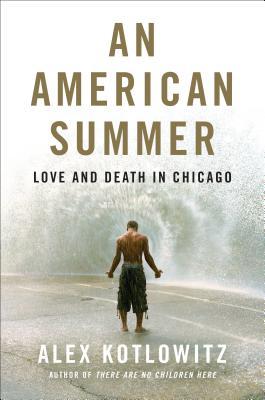
Recommended by Craig B. Futterman, Clinical Professor of Law

A history of the birth of LA (1900-1930), this book examines the pillars of this city in the desert—water, movies, and spiritualism—in a highly readable and fascinating way. I was a dam engineer in LA in a past life and count “Chinatown” as one of my favorite movies, so I was predisposed to like this book. But even if you’ve never been there, I recommend it.
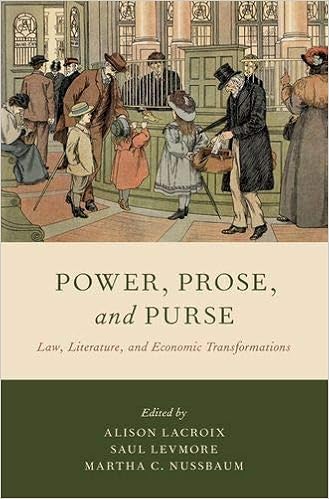
A captivating collection of essays that use literature to understand the relationship between law, money, and economic activity. The essays focus on the period between the Industrial Revolution and the Great Depression and draw upon a diverse range of novels. It is a magnificent example of how the interdisciplinary approach can provide deep and unique insights.

This novel, a Pulitzer Prize finalist, follows characters whose lives are transformed—and in many cases, stolen—by the AIDS epidemic on the North Side of Chicago in the 1980s. I regularly walk by many places that feature in the story (Ann Sather Restaurant, Unabridged Bookstore, Sidetrack bar), and each time, I'm pulled back into the plot. It's a beautiful and haunting book that will resonate with readers who are unfamiliar with the setting and even more so with those who know the neighborhoods (Lakeview and Lincoln Park) where key events take place.
An absorbing, gutting book that centers on the AIDS epidemic in 1980s Chicago, with a parallel story that unfolds in Paris in the present day. Lots of big themes—love, loss, questions of why some succumb to death and others are spared—led to lots of tears on my Kindle.

Another novel I loved that has a unique narrative structure. It sounds like a mystery, and you may start it wanting to find out what happened with respect to the disappearance of a young teen while she is visiting a small English village. But you come to realize that you aren’t going to find out. The book describes (in rotating fashion) the unique characters in the village (including their possible connections to the young woman). Using beautiful and mesmerizing language, it also describes the natural and seasonal cycles of the village, in which lives and routines continue unaffected (or only marginally affected) by the main event.

A mystery, a study of social class, and a history of the Irish famine, all wrapped up in a mesmerizing set of nested plots that revolve around a richly described cast of characters (most of them hiding secrets) sailing across the Atlantic from County Cork to New York aboard a famine ship in 1847.

Where the Crawdads Sing by Delia Owens is a fun novel (with some connection to a real set of events). I’m almost embarrassed to recommend such a popular novel, but it is fun and thoughtful, and it even makes you think about rural life, isolated people, and how law works in conventional, small towns.
I recommend Where the Crawdads Sing by Delia Owens. I read it under rather unusual circumstances—while recovering from open-heart surgery in October. It was given to me by a friend and I found it to be fascinating, engaging, charming, and moving. It introduces us to a world with which we (I assume this is true for at least 99% of alums) are wholly unfamiliar and does so in a way that is hard to put down.

Rick Perlstein’s Nixonland traces the political rise and fall of the 37th President. Perlstein, a historian and writer for the Village Voice who lives in Chicago, shows how Nixon identified and successfully exploited the politics of resentment and backlash in the 1960s. As we enter the season of impeachment in the United States, the book is a sober reminder that plus ça change, plus c'est la même chose. But there is a crucial difference this time, in that somehow I do not see the current occupant of the White House resigning.
The Code of Capital, by Katharina Pistor—a brilliant analysis of the ways in which law shapes both the generative and (mal)distributive effects of wealth. A sobering read that manages to bridge successfully academic discussions among legal specialists and popular discourses on inequality.

Kenneth Port’s Deciphering the History of Japanese War Atrocities: The Story of Doctor and General Shiro Ishii is the most comprehensive English-language investigation of the mastermind of Japanese biological research in World War II. Coming from an elite family of ex-samurai, Ishii was a fierce nationalist who set up the famous Unit 731, which conducted grisly experiments in China that killed thousands of Chinese civilians along with allied POWs. He escaped punishment after the war, being granted immunity by General MacArthur in exchange for giving his research results to the American military, a reminder of the political nature of defendant selection in war crimes trials. Port’s book is exhaustive, unearthing every trace of Ishii’s record. A local note: Port was a scholar at William Mitchell College of Law in St. Paul who passed away earlier this Fall of multiple myeloma, but his life was extended by an experimental trial at the University of Chicago in 2018. I received the book from Ken during his remission, and it was wonderful to see him feeling well for a bit.

This elegant, magisterial novel won the 2019 Pulitzer Prize in fiction. It will connect you with trees and with people whose passion is trees in ways you wouldn’t have dreamed possible.
One of my favorite books from the last few years. In this epic, lengthy novel that slowly weaves together the lives of several people, Richard Powers writes a poetic, moving, and flowery love letter to trees. Yes, a love letter to trees—a particularly compelling one at that—I cannot think of a more apt way to describe this book. It is a work of art, to be read slowly and savored. (It would be difficult, perhaps tedious, to rush through, and it doesn’t make a good nightstand book.) I greatly enjoyed reading this book, and it has lingered with me afterwards. It’s changed how I look at trees and forests, and humans’ relationship with them, through both facts and poetry.

An engrossing set of interviews with prominent historians with American leaders, ranging from George Washington to Martin Luther King, Jr. The author adroitly draws out what makes these leaders extraordinary, the challenges they faced, and how they shaped American history. The nation’s ability to produce such leaders will inspire the reader’s confidence in our future.
I am helping lead a new Law School initiative in Brazil, and I read this book before a recent trip there to meet potential partners. If you have an interest in this fascinating and important nation, this new history is the place to start.

I recently read (after two previous failed tries) W.G. Sebald’s Austerlitz. It jolted me. At the core, it is a story of a man whose parents sent him at early childhood away from Nazi occupation to England, on his own, as part of the Kindertransporte. The parents were ultimately murdered. What makes the book so disorienting when you begin reading it (and why it was hard for me to stick with it initially) is the blend of fiction and essay styles. Is it fiction? Is it a documentary? What is the plot? Some of the most captivating “story” elements are accounts of conversations the narrator had with Austerlitz, the main character, who himself reports his own past conversations with others whom he met in his occasional lifelong attempts to piece together his personal history. It’s a holocaust story like no other, because it focuses on the emotional impact of the horrors on the child-survivor in his old age. And it is told like no other, via indirect accounts and unadorned chronicles. A year since reading the book, I now see its style influence in other books, where the story integrates fiction and documentary prose to affect how we experience the plot and how we think about the historical context.

In this powerful book, a simple, intuitive proposition is presented—the stories humans tell influence economic outcomes. While you may think that’s obvious, and the book is not filled with data (it itself is presented more as a narrative of woven together anecdotes), it’s an addictive and powerful narrative. It’s also a “quick read” for a book about economics. The ideas and stories presented will influence how you think of the past and present, and future. It will probably even inform actions you take in the future. In explaining and supporting the central thesis, Shiller provides us with much more than a book supporting the idea that stories influence economics, he provides us a quick-flowing, interesting story about the power of stories.

Wade in the Water, by Tracey Smith—a collection of poems that sweeps without blinking or flinching from the intimate to the historical to the transcendent. A book befitting a poet laureate.
The author writes in fluid prose from a sociological perspective imbued with an intuitive understanding of business economics. This book discusses aspects of organizational structure and operation that will help lawyers better understand the ways that clients look at problems and will help them more effectively solve these problems using innovative contractual structures. For the academic, the book previews many strands of the subsequent literature on the sociology of organizations of interest to contract academics. Not exactly airplane reading, but written in a way that won't put you to sleep.
Recommended by Craig B. Futterman, Clinical Professor of Law

I turned to this before Christmas in 2016, the year of the Brexit vote and Trump's election, but opted instead that year to recommend to the alumns something more cheerful. Three years later, I return to Thucydides, upon learning that Boris Johnson installed on his desk at 10 Downing Street a bust of his hero Pericles. Johnson studied classics at Oxford, but earned only an upper second class degree in the subject and, more recently, the renuntiatio amicitiae of ancient historian Oswyn Murray. Unlike Johnson, I've evolved in my views since I was an undergraduate. I used to think great art might be some compensation for bad politics. In 2016, friends predicted a resurgence of interest in politics and an efflorescence of great art as a response to the year's threats. I stand by what I said then: Neither would cheer me as would a resurgence of commitment to sweet reason, to competence, to informed decisionmaking, to what I have no less sexist term ready to hand for than brotherly love. The arts can certainly help, but I'm reminded of Harry Lime's speech in the Third Man: "In Italy, for thirty years under the Borgias, they had warfare, terror, murder and bloodshed, but they produced Michelangelo, Leonardo da Vinci and the Renaissance. In Switzerland, they had brotherly love, they had five hundred years of democracy and peace and what did that produce? The cuckoo clock." I may not be an optimist, but I am an idealist—I want both peace and great art, a combination denied to Periclean Athens. I fear we're in instead for an age of shoddiness and war, the worst of both worlds. And it is clearer to me now than ever before that Harry Lime, the character who praised great art over good government, was a villain.

A compelling retelling of the history of Native Americans told by an enrolled member of a mid-western tribe. Eye opening, full of rich facts and personal stories, and invaluable for a teacher of American Indian Law, I recommend everyone read it.