In what has become an annual tradition, we asked the Law School’s distinguished faculty to tell us about the last good book they read. The results cover a wide range of genres and topics, from law to history, nonfiction to fiction.
We’re giving away a selection of books from our faculty reading recommendations list for you to enjoy in the new year! University of Chicago Law School alumni who make a gift of any size by midnight on December 31, 2021, will be included in this drawing. If you have given at any time this fiscal year (including gifts made on or after July 1, 2021), no worries — you have already been entered in the drawing.
Make a Gift
Rules are as follows: Only University of Chicago Law School graduates are eligible. This promotion will run from July 1, 2021, to December 31, 2021. To be eligible, you must either make a gift to the Law School or send your name and address to:
University of Chicago Law School, Office of External Affairs
c/o Laurel Lindemann
1111 E. 60th Street
Chicago, IL 60637
While you may make multiple gifts, you will only receive one entry in the drawing. The prize winner will be chosen based on a random drawing of all who have made gifts or sent in their information. To receive the prize, winners must agree that their name will be available for publication as a prizewinner. Prizes are subject to change. Current employees of the University are not eligible.

A fascinating and provocative challenge to the conventional view that uniformity is a central feature of law. The authors show that tailoring to individual circumstances is a long-standing feature of law, and technology and algorithms make it increasingly feasible. The normative implications are far-reaching and surprising.

If you liked Bad Blood by John Carreyrou about Elizabeth Holmes and the Theranos unraveling, you’ll really enjoy Cult of We. The book chronicles the quick rise and fall of WeWork—the office space start-up—and its enigmatic founder, Adam Neumann.

A history the way history should be done. Full of facts and context, with no preaching. I learned an enormous amount about not just this fascinating (and dysfunctional) family, but the history of our financial system. I have liked Chernow’s other works, but found this one the most satisfying for someone with an interest in business and finance.

A reflection on the importance of truth to our legal system, especially the Department of Justice, the costs of adhering to it and instilling respect for it, and the challenges of communicating it. Part bildungsroman, part behind-the-scenes revelation, and ultimately an examination of leadership and organizational culture.

As a child, I had read this book, but it left no impression. I read it again recently. I found it disarming, profound, even heartbreaking. I suppose that the difference this time around is that, as an adult, I had so much more learn!

A novel that manages to be both sweeping and intricately detailed. The focus is General William Tecumseh Sherman’s March to the Sea of 1864-65, during which Sherman and his 60,000 Union troops cut a swath from Atlanta to Savannah and then turned north to march through the Carolinas. The vast cast of characters includes historical figures such as Sherman (depicted as a restlessly ambitious tactician who also cultivated an image among his troops as “Uncle Billy”), Ulysses S. Grant, and Abraham Lincoln, as well a fascinating array of fictional characters, including a formerly enslaved teenager who is also the daughter of a Georgia plantation owner and who joins the Union army in the guise of a drummer boy; a son of Irish immigrants to New York who finds his way to the battlefield; a pair of loquacious but menacing Confederate deserters; and a host of others, including the burned cities and devastated countryside through which the armies march and fight.

Five principal characters in three different centuries, each heroic (even the one who murders) and each with a captivating and inspiring story. Or perhaps six principal characters and four different centuries if you count the author of an ancient, fragmented manuscript that ties the stories together and that ultimately teaches large lessons. A brilliant, beautifully written, deeply moving masterpiece.
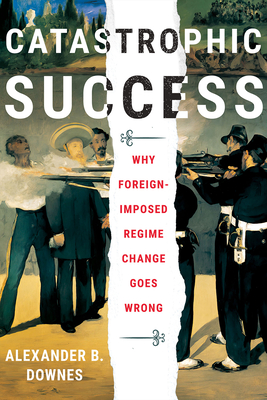
One of the defining events of the last year was the America’s withdraw from Afghanistan and the subsequent fall of the county’s U.S. supported government. The Taliban’s swift victory came after America spent twenty years, thousands of lives, and billions of dollars trying to nation build in in Afghanistan. This is not a unique event but instead part of a long-running pattern. Since 1909, the United States has toppled thirty-four foreign governments with the goal of imposing new regimes and only a few of those efforts could even plausibly be called successful. For these reasons, I’ve thus been interested this year in understanding more about why the United States keeps making the same mistakes. The best account I’ve found on this topic is the political scientists Alendander B. Downes new book, Catastrophic Success: Why Foreign Imposed Regime Change Goes Wrong. Downes uses two-hundred years of data to empirically study what happens when foreign countries try to impose new regimes in another country. In Downes telling, the “Historical records . . . indicates that foreign-imposed regime change is not, in the long term, cheap, easy, or consistently successful.” Importantly, Downes provides a compelling account of why regime change goes wrong.

Hardly an adventure story, its quiet narrative of small-town friends and strangers kept me entranced. The language is luscious and the characters are intriguing. If only it were easier to remember which was the title and which was the author’s name.

A young man who is trying hard to forget a terrible personal tragedy moves into a new apartment. His new neighbor is an old woman who has lived through all of the upheaval of Russian history in the 20th century, and she is desperate to remember and convey her memories to someone else who will remember for her. The story of an unlikely friendship, and a story of how one seemingly small unkind act can reverberate throughout the lives of others.

A book about how and why to be rational–that is, to try to see the world as it is even if it isn't what we wish. (A “soldier mindset” is committed to fighting back against beliefs we don't currently hold; a “scout mindset” is committed to learning the truth about what's out there, even if it's bad news.) The book also demonstrates great sympathy for the emotional urges that make it hard for us to think clearly, using stories and examples ranging from the Dreyfuss Affair to the author's own love life. Important and maybe life-changing.

I very much enjoyed The Cole Trilogy: The Physician, Shaman, and Matters of Choice, by Noah Gordon. Each book follows the life of a doctor and his descendants. The Physician takes place in the middle ages in England and Persia, Shaman is set in mid-19th century Illinois and Matters of Choice is based in western Massachusetts in the late 20th century. Gordon creates memorable characters. His dialogue and descriptions vividly portray the social and cultural life of the times. And Roberta J. Cole, the protagonist of Matters of Choice, is a lawyer as well as a doctor! (although the law play little role in the book). The Physician has been made into a movie.

I really learned a great deal from Fordlandia (by Greg Grandin) about Henry Ford’s career and failed attempt to create a city in Brazil for rubber production. A Woman of No Importance (Sonia Purnell) is such a good World War II spy piece, that you would not know it was nonfiction. So there are two books I am reading or have listened to within the month that are both informative and amazing.

Grant famously penned this autobiography (at his friend Mark Twain’s urging) as he was dying of throat cancer. He finished writing the 1200-page tome (producing between 25 and 50 pages a day) five days before he died in July 1885. But the heroic conditions of its composition shouldn’t lead the reader to expect a dry compendium of triumphs. A clear, sometimes wry authorial voice conducts us from Grant’s bucolic boyhood in southern Ohio, to his ambivalence about attending West Point, to his service in the Mexican-American War (“a wicked war”), to his stint working in the family store in Galena, and finally his rise to the position of lieutenant-general of the U.S. Army, which began with a series of victories in the western theatre and ended with the legendary surrender to Grant of Lee’s Army of Northern Virginia at Appomattox. The Memoirs are filled with striking details. To name just a few: Grant, a devoted husband and father, brought his 12-year-old son along with him for much of the battle of Vicksburg; on the morning of the Appomattox surrender, Grant was suffering from a migraine (which he treated with mustard plasters); and throughout the Memoirs, Grant consistently refers to the Union’s foes as “the so-called Confederate government.”

I am not a Catholic, but I loved this very Catholic novel for its masterful depiction of a flawed hero, a “whiskey priest” whose awareness of his failures pushes him beyond measure.

I have been reading and enjoying Less, by Andrew Sean Greer. The book is a fascinating and often very funny character study of an aging novelist who goes on a world tour in order to avoid attending the wedding of his ex-partner (and love of his life) to another man. It is undoubtedly clichéd to say that this tour turns out to be more an exploration of the novelist’s self than of the world around him. But the protagonist is so compelling, and the set pieces of the plot so beautifully constructed, that one cannot help but enjoy the journey.

A surreal novel about second chances and about overcoming regrets. The book swallows you from the first page, and cannot be put down. Matt Haig has such an original and absorbing style, that once I finished this book I binge-read four or five other novels of his, and I also recommend his How to Stop Time. In each of Haig’s books you have to be willing to submit to a supernatural premise — time travel, non-aging, spirits among us — but these are only placeholders to explore emotional angles in a unique and memorable way.

I was won over by the author’s blurb, describing her as “an ex-historian with lots of opinions and excessive library fines, currently living in Kentucky with her husband and their semi-feral children”. And then I fell deep for the story. It may remind you of The Secret Garden. It’s a lovely adventure and love story, emphasizing the power of books to bring us together and transport us to new worlds.

The New Republic’s poetry editor, Hong says she doesn’t like Wordsworth. But his dicta of poetry as emotion recollected in tranquility applies to her luminous, if sometimes wobbly, collection of essays, which is not just about growing up Korean-American in LA, but about the accumulation of slights, harms, and contempt that comes with being Asian-American.

Kashua is the preeminent Palestinian-Israeli author writing in Hebrew, and one of the most original and brilliant Hebrew authors of our time. This book, like his other books, is about life between the cracks — a story of a Palestinian-Israeli trying to find his place in a society dominated by the majority Jewish population and at the same time maintain his Arab identity and relations. The humor, sociological nuance, plot twists, and emotional power make Kashua’s book a universal tale about alienation, non-belonging, and tragedy, and a truly great read.
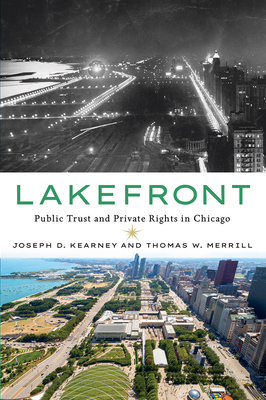
This book recounts the backstory behind Chicago’s incomparable lakefront. A deep dive into property rights and land use conflicts at the water's edge.
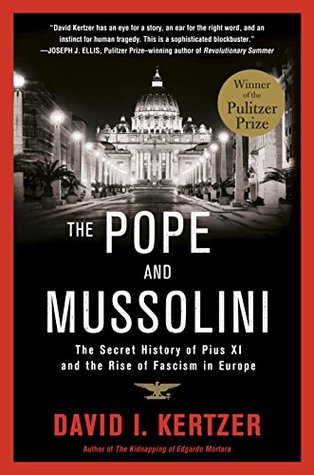
Just fabulous. The Pope thought he was using Mussolini to help create a religious state in Italy; Mussolini thought he was using the Pope to achieve his nationalistic vision. Each of them played a game of chicken with the other, all the while coming increasingly under the grips of Hitler and his evil henchmen. The intrigue inside the Vatican and the intersection of faith and politics, played out through the acts of a sprawling cast of interesting characters makes this a compelling read.

A novel about a thirty-one-year-old female novelist and sometimes-waitress living in Cambridge, Massachusetts, during the summer of 1997. But that description, which might make this book sound small and local in scale, doesn’t begin to capture the humor and humanity of its insights about writing, art, love, and adulthood. A wonderful, smart, and complex main character whose story gradually unfolds over the course of the novel, and a truly beautiful final scene.

Labutat’s book (translated well from the Spanish) is not quite a novel, nor a history of scientific discovery in the early twentieth century. Befitting its title, it moves between those two modes to recover the profoundly upsetting effect of discoveries at the beginning of the atomic and quantum age.
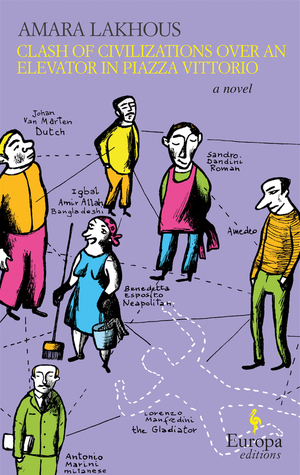
Set in an immigrant community in modern-day Rome, this book is ostensibly a murder mystery, but is actually very funny. As we hear from various (colorful) characters in this community describing to the police what they think happened, we learn the many ways in which “others” are misperceived by those around them.

It is hard to imagine how Londoners persevered during the Blitz, but Larson shows us through some remarkable stories.

From Pulitzer Prize winner Fredrik Logevall, this is a well-written and fast-paced account of John F. Kennedy’s life up through 1956 (with a second volume to come eventually). It provides a rich portrait of not only JFK but also the times in which he lived—from the roaring 20s, through the Great Depression, through World War II, through the early years of the Cold War. Logevall’s assessment of his subject is appropriately balanced, describing both how JFK benefited enormously from his family’s wealth and connections and his own good looks, but also how he was ambitious, politically talented, and (at times) extremely hard working. The book also does a great job of describing how JFK’s views about the world evolved and increasingly departed from the problematic views of his father.
I recommend JFK: Coming of Age in the American Century, 1917-1956, by Fredrik Logevall. The author, a Pulitzer Prize-winning historian, does a brilliant job of bringing to life the fascinating experiences of the young John F. Kennedy and of offering terrific insights into how he became the person he became.

Home Waters: A Chronicle of Family and a River, a memoir by the son of Norman Maclean, author of A River Runs Through It. Light but thoughtful touches on ingredients with resonance in me—the West, family (especially the complex relationship between fathers and sons), Chicago, writing, and the riches of nature. A spare but intimate work.

While you might have already watched the new series on Hulu, I definitely recommend Dopesick by Beth Macy, the book on which the series is based. The Innovation Clinic has worked with companies in the addiction treatment space, but for those less well-versed in it, Dopesick will be a real eye-opener. Macy provides a comprehensive yet deeply humanizing account of how America came to be mired in a seemingly inescapable opioid epidemic, touching on topics such as how one comes to be addicted to opiates (and why the addiction is uniquely hard to overcome), how the FDA got it wrong, and the ripple effects of addiction in the communities that it touches. The book was written in 2018, and the Purdue Pharma, Sackler family, and Johnson & Johnson settlements earlier this year now make for a neat, although some may say unsatisfying, ongoing epilogue.
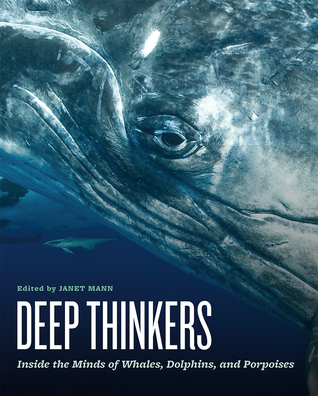
For my book on animal rights I have been reading a lot of scientific books on animal cognition. Of these, a real masterpiece is Hal Whitehead and Luke Rendell's The Cultural Lives of Whales and Dolphins, a rigorous account of learning in whales and dolphins, arguing convincingly that quite a lot of it is not simply genetic, but cultural, imparted by imitation and teaching from the social group. Their conclusions have ethical importance: among other things, keeping orcas and dolphins in marine pens deprives them not just of free movement and society, but of all chance to become themselves, fully what they are. People should pair this with the more popular collection of essays edited by Janet Mann: Deep Thinkers: Inside the Minds of Whales, Dolphins, and Porpoises, with essays by leading scientists and glorious photography. It's so much fun to learn about these mysterious animal relatives, whose lives challenge us all to think, and live, better.

A palace intrigue set in an interplanetary empire. The protagonist heads from her far-flung homeworld to the imperial capital armed with the technologically implanted memories of her dead predecessor, a too-tempting love of imperial culture, and yet a stubborn loyalty to her home planet. A page-turning and haunting story ensues. The best science fiction book I've read in a long time, and the sequel (A Desolation Called Peace) is just as good.

Everything you know about World War II on the Eastern Front is wrong. McMeekin blows apart myth after myth about the Soviet Union fighting against the Germans in this exhaustively researched and documented book. I’ve read a lot of military history on the War, and I learned or unlearned something on nearly every page. Be warned, you will think less of everyone involved in the war, from Churchill to FDR to Stalin (if that is possible). This book is mind blowing.

I recently read Louis Menand’s The Free World: Art and Thought in the Cold War. I much enjoyed his The Metaphysical Club, but this book looks at a much later time. This book provides an intellectual history of the United States between 1945 and 1967. It charts the undercurrents in art, politics, and public discourse from the end of the Second World War until the Vietnam War and the chaos of the late Sixties. It completely captures the Zeitgeist that existed just at the time I was about to start college. Among other things, it gave me a much better sense of where all my college professors were coming from. I wish I had read it back then.
Menand’s book analyzes intellectual movements, mostly in the United States and France, in the period immediately following the end of World War II, ending with the Vietnam War. Each chapter focuses on a different topic or movement, such as the art and music created by John Cage, Robert Rauschenberg, Jasper Johns, and Merce Cunningham, the writings of the Beats (and their connection to Lionel Trilling), the thinking of Jean-Paul Sartre, or the life and works of James Baldwin. We get, if you will, group biographies of the existentialists, the action painters, the Black Mountain School, and of course the British Invasion.

Lacking in knowledge about the Ottomans? Catch up with this riveting history by Alan Mikhail!

At the age of 39, Toni Morrison published this amazing debut novel. There is much to admire and contemplate, and one particular scene of horrific violence, which succeeds empathically in a way I would not have thought possible.

At the recent Inauguration of President Alivisatos, the Nobel Prize-winning physicist Steven Chu warned about how great power competition with China could squelch research collaboration and lead to suspicion of ethnic Chinese researchers. He though universities had a duty to proactively address this issue. In this book, Columbia professor Mae Ngai (formerly of the University of Chicago History Department) documents how a series of gold rushes around the world drew Chinese emigrants and generated tension with white settlers. She argues that the exclusion of Chinese labor was at the center of global capitalist expansion in the 19th century.

At a time when the future of the women of Afghanistan and of the gender binary are both once again wide open and much discussed questions, this 2014 book by a Swedish journalist has new relevance.The book explores the phenomenon of basha posh, when a family with no or too few boys designates one of its young daughters to take on until puberty a male appearance and role. The young people interviewed and observed, whose ages, backgrounds, attitudes, and aspirations all vary, but whose experiences seem on the whole quite positive, provide fascinating new perspectives on gender fluidity.

An examination of one of the important issues of our time, sexual violence and intimidation, and an examination that draws upon multiple disciplines. It connects the problem to the emotions and shortcomings in the law, and it offers a path forward that would recognize individual dignity.

An innovative analysis argues that antitrust law failed to prevent the consolidation of employers with the result that wages of workers have stagnated. The book shifts attention away from the usual focus of antitrust law, product markets, to the vitally important input market of labor, and it has momentous implications for the economy and income inequality.

Anyone familiar with Powers will recognize the structure and scope of this powerfully personal and historic novel, which weaves together one woman’s tragedy with one company’s triumphant, centuries-long rise. Gain takes place in a fictionalized Illinois town that is the home to a multinational chemical company and a family that is grappling with a cancer diagnosis and questions around whether that health tragedy is related to their corporate neighbor. Powers avoids simple narrative traps that other authors might trip, spending little time on the lurking question of whether the company caused the cancer, but instead explores deeper questions about how a family grieves a still-living relative, how assigning blame can be both so tempting and so unfulfilling, and how a company’s place in its community can be so fraught. Beyond all this, Powers tells the history of one fictional — but extremely familiar — company from the Revolutionary era to the modern day, elucidating key moments and principles in the history of American corporate law in a remarkably accessible and even moving way. After reading his more recent opus, The Overstory, which similarly challenges us to rethink the relationship of American capitalism with our natural environment, going back to Gain is a wonderful, if challenging and deeply sad, visit to our fictional neighbors in downstate Illinois.

I really learned a great deal from Fordlandia (by Greg Grandin) about Henry Ford’s career and failed attempt to create a city in Brazil for rubber production. A Woman of No Importance (Sonia Purnell) is such a good World War II spy piece, that you would not know it was nonfiction. So there are two books I am reading or have listened to within the month that are both informative and amazing.

A fascinating collection of conversations with leading thinkers, artists, statesmen, and athletes about the essential values of America. At a moment of anxiety and reflection in our country, the book’s many perspectives on America’s strengths and shortcoming will inspire thought about America’s future, its democracy, and continued leadership in innovation and ideas.

Polar exploration always is the stuff of gripping tales, and none more so than Julian Sancton’s Madhouse at the End of the Earth: The Belgica’s Journey Into the Dark Antarctic Night is one of the best of this genre. The combination of genius, heroism, naiveté and greed and stupidity runs from start to finish.

Eels are delicious. That’s about all I knew. This book opened my eyes to one of the world’s most fascinating creatures. I just couldn’t wait to tell my wife facts after every reading. (She wasn’t as keen on hearing them, especially the third or fourth time.) But you won’t be able to help yourself either. Aristotle makes an appearance, as does Freud and countless others who have tried to understand eels. No one has. No one has ever seen one breed and no one really understands them. The author alternates between chapters about eels and memoirs of he and his father fishing for eels in Sweden. The factual chapters are hugely interesting; the personal ones are deeply moving, especially for fathers with sons. You’ll like both types of chapters, even if you don’t like eels or don’t have sons.

One the greatest works of Latin literature in an exciting, swift-moving translation. The hero’s journey brings forward profound themes of love, immigration, violence, and the founding of a new society. The poetry of this epic is elegant and accessible translation, and for the non-specialist reader, the rich set of contextualizing notes is highly illuminating.

For my book on animal rights I have been reading a lot of scientific books on animal cognition. Of these, a real masterpiece is Hal Whitehead and Luke Rendell's The Cultural Lives of Whales and Dolphins, a rigorous account of learning in whales and dolphins, arguing convincingly that quite a lot of it is not simply genetic, but cultural, imparted by imitation and teaching from the social group. Their conclusions have ethical importance: among other things, keeping orcas and dolphins in marine pens deprives them not just of free movement and society, but of all chance to become themselves, fully what they are. People should pair this with the more popular collection of essays edited by Janet Mann: Deep Thinkers: Inside the Minds of Whales, Dolphins, and Porpoises, with essays by leading scientists and glorious photography. It's so much fun to learn about these mysterious animal relatives, whose lives challenge us all to think, and live, better.

Everyone who wants to understand race in America should read this brilliant book, which is a masterful exposition of the parallels between three caste systems: India’s, Nazi Germany’s, and America’s race-based caste system. Wilkerson surveys the historical roots of the three systems and provides a taxonomy of the pillars and tenets they share. One of the most chilling scenes unfolds at a 1934 meeting where Nazis leaders debated how far to take their racial purity laws; many thought America’s segregationist laws went overboard. In linking our country’s caste system to others, Wilkerson reminds us that slavery is not merely “a sad dark chapter in the country’s history,” but is instead “the basis of its economic and social order.” This book is replete with gripping stories of dehumanization and shocking facts. For example, Alabama didn’t abolish its anti-miscegenation law until the year 2000, over thirty years after the Supreme Court deemed such bans unconstitutional, and even then, 40% of the electorate voted to keep the marriage ban on the books. This book galvanizes us to take a hard look at our own role in perpetuating America’s caste system even as it decries how far we are from realizing any ideal of equality.